ThinkWithYourInk
5th Class St.Mary’s, Blessington
Any enquiries email cforde@stmarysns.ie
Friday 27th of June
Well done, Fifth Class is almost complete and you will be a 6th class student walking out the door this evening! It’s been a very enjoyable year from my point of view. I really think we’ve grown and improved as a class.
Remember — nobody has to be perfect. The most important thing is that you give your best. And only you know what your best really is. That’s something we’ve all started to realise this year.
Make that your identity. Not “I’m good at this” or “I’m good at that.” Your identity is “I always give my best.” Your identity is “I hang in there when things aren’t going well.” “When there’s a problem, I keep at it until I find a solution.” That’s the kind of person to be proud of — someone who gives their best, no matter what.
If that’s the one thing we take from Fifth Class, then it’s been a great year.
There’s a short video below with some highlights from our time together. Well done again. I’ll be alongside you all next year and we will have a number of 6th class tournaments.
Have a great summer, and thank you for a great year!
Friday 13th of June
How are all your Teach-the-Teacher projects going? We’ll begin them early next week — probably starting on Tuesday — just to give you a little more time to prepare. We’ll aim to do three, four, or five each day.
The weather is still a bit wet this morning, but hopefully the wall will have dried out by the afternoon. We’ll put on the first coat of paint, and then a great double coat before next week kicks off properly.
We’ll also try to play Olympic handball in the air — possibly this morning. Hopefully we can get two or three rounds played.
We still have one Stay Safe lesson to complete, and we’ll be finishing that today as well.
What is today’s date?
Some people believe Friday the 13th is an unlucky day. They might feel nervous or worried, even if nothing bad actually happens. This is called being superstitious — believing in things like bad luck or good luck that aren’t really based on facts or science.
The fear of Friday the 13th even has a long, tricky name: Paraskevidekatriaphobia!
- In the past, people believed 13 was unlucky — like at the Last Supper, where 13 people were at the table before Jesus died.
- Friday was also thought to be unlucky in some old stories.
- But not everyone agrees — in Hinduism, Buddhism, and other parts of the world, 13 can actually be lucky!
- Some places think Tuesday the 13th is the unlucky day, not Friday.
Even though there’s no proof that Friday the 13th causes bad things to happen, our feelings and beliefs can still affect how we act. For example, if someone feels nervous on that day, they might be more clumsy — and that can make something go wrong!
🍀 Famous Superstitions Around the World
Here are some fun and famous superstitions — do any sound familiar?
- Walking under a ladder – said to bring bad luck.
- Breaking a mirror – some believe it brings 7 years of bad luck!
- Finding a four-leaf clover – thought to bring good luck.
- Black cats crossing your path – some say it’s bad luck; others say it’s lucky!
- Throwing salt over your shoulder – meant to keep bad luck away if you spill salt.
- Crossing your fingers – used to wish for good luck.
- Lucky socks or pens for tests – some people feel more confident using them.
- Saying “Bless you” when someone sneezes – an old tradition to protect them from bad spirits!
- Avoiding the number 13 – some buildings skip the 13th floor!
- Friday the 13th – thought to be unlucky, but really, it’s just another day.
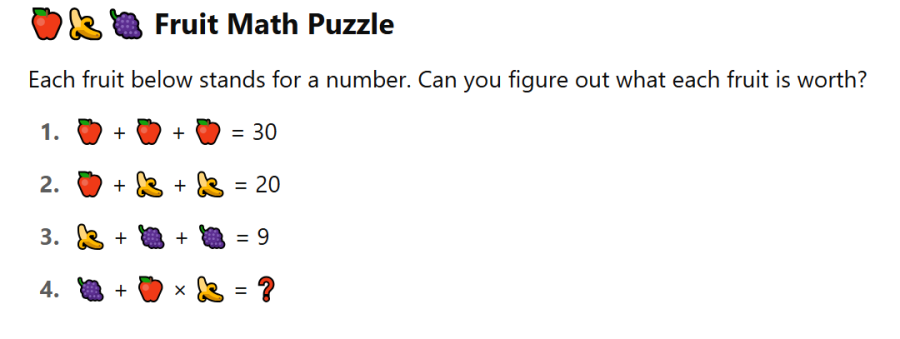
Puzzle of the day
Thursday 12th of June
The weather isn’t great today but if we get a dry spell we will apply the first coat of paint to the mural.
I’m just looking for confirmation from 2 students regarding the tour. We have a library visit at 12 today.
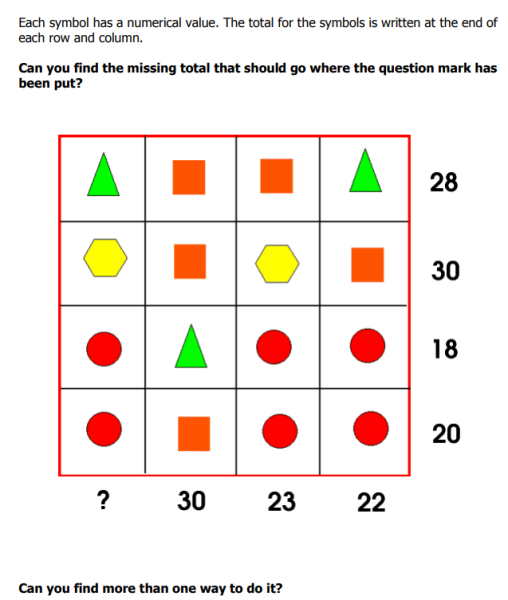
Computational Thinking Thursday
🧠 Task Title: “The Broken Calculator” Challenge
📱 Scenario:
You’ve got a calculator, but some of the keys are broken. Your team’s job is to figure out how to reach certain target numbers using only the working buttons.
Working buttons: 2, 3, 4, +, ×, =, Clear Broken buttons: 0, 1, 5, 6, 7, 8, 9, -, ÷
🎯 Challenge:
Your team must create equations to reach the following target numbers, using ONLY the working buttons (2, 3, 4, +, ×). You must show your steps, and can only use each number once per equation (unless you use brackets or operations to reuse them cleverly).
Target Numbers:
- 10
- 12
- 15
- 24
- 36
- 50
- 72
🧊 Task Title: “Shape Shifter Grid”
🔶 Scenario:
You’re on a shape grid puzzle team. Each square on a grid can hold one shape:
🔺 Triangle
◼️ Square
⚫ Circle
Your team must follow a set of rules to fill in the grid correctly. Only one solution exists. Can you figure it out?
🗺 Setup:
Provide each group with a 4×4 grid on paper (or draw it on mini whiteboards), and a list of rules.
Here are the Rules for the puzzle:
- Each row and each column must contain one of each shape: 🔺, ◼️, ⚫
- A ⚫ can’t be next to another ⚫, even diagonally
- No row can begin or end with a ◼️
- The second row must have a 🔺 in the second column
- The bottom right corner must be a ⚫
🧩 Task Title: “Mystery Numbers Logic Grid”
🕵️ Scenario:
There are four secret numbers, each between 1 and 20. Your team must use the clues below to figure out exactly what they are, and where they go.
Each number is different.
📋 Clues:
- The second number is double the first.
- The third number is 5 more than the second.
- The fourth number is a factor of 20.
- The total of all four numbers is 49.
- The first number is odd.
This puzzle didn’t have a solution. And some of you worked right until the end, checking, testing, trying again. That shows something really special about you. It tells me you’re the kind of people who don’t give up just because something is hard. You kept thinking. You kept trying. And that kind of perseverance is one of the most important strengths a person can have — more important than being fast, or getting it right on the first go. That mindset is how inventors build things, how athletes improve, how writers create great stories.
So if you were one of the ones who stuck with it — be proud. That wasn’t wasted time. You were training your brain to be strong, persistent, and resilient. That’s a superpower.”
Tuesday 10th of June
Good morning everyone!
Today we’re going to learn about ratios. A ratio is a way of comparing two or more amounts. It tells us how much of one thing there is compared to another. For example, if there are 2 apples and 3 bananas in a bowl, the ratio of apples to bananas is 2:3.
We’ll be doing some group questions and a few fun poses to help us understand ratios better.
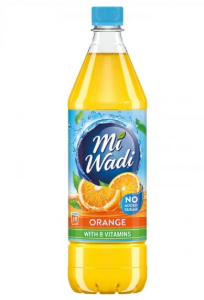
Mi Wadi orange drink says we need to mix 1 part orange with 5 parts water. That means for every bit of orange, we add five bits of water. If I pour in 2 cups of orange, how many cups of water do I need?”
- “If we used 3 parts orange, how much water would we need?”
- “What’s the ratio of orange to total liquid?” (1:5)
- “If we wanted to make 10 cups of drink, how many parts would be orange and how many would be water?”
🧃 Drink & Food Ratios
- Orange Squash: You mix 1 part orange squash with 4 parts water. How much water do you need if you use 3 parts orange?
- Fruit Bowl: There are 5 apples and 10 bananas in a bowl. What is the ratio of apples to bananas?
- Pizza Toppings: A pizza has 6 pieces with cheese and 2 pieces with pepperoni. What is the ratio of cheese to pepperoni?
🧱 Building & Toys
- Lego Blocks: Jamie used 8 red Lego blocks and 12 blue blocks. What is the ratio of red to blue blocks? Can you simplify it?
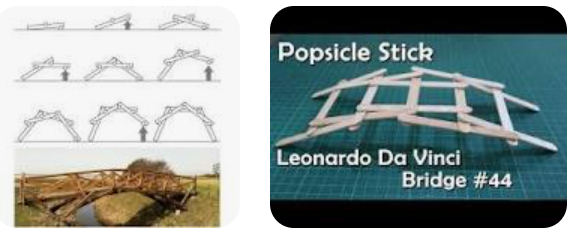
- Bridge Building: You used 14 sticks to make a DaVinci Bridge. If 10 are vertical and 4 are horizontal, what’s the ratio of vertical to horizontal sticks?
🏃 People & Groups
- Classroom Chairs: There are 15 red chairs and 10 blue chairs in the room. What is the ratio of red chairs to blue chairs?
- Class Group: In a group of 20 students, 12 are girls and 8 are boys. What is the ratio of girls to boys?
🐾 Fun & Animal Ratios
- Farm Animals: On a farm, there are 6 cows and 18 sheep. What is the ratio of cows to sheep? Can you simplify it?
- Spider Legs: A spider has 8 legs, and an ant has 6. What’s the ratio of spider legs to ant legs?
🎮 Challenge Question
- Game Cards: A game box has 40 cards – 25 are attack cards and 15 are defence cards. What is the ratio of attack to defence cards? What’s the total number of parts?
Yesterday we used 14 popsicle sticks and a copybook to explore how the DaVinci Bridge works. We watched Sven show us how to build it, and now we’re ready to give it a try ourselves!
This morning, we’ll spend a few minutes building our own DaVinci Bridges. We’ll also talk about what a DaVinci Bridge is and why Leonardo da Vinci originally designed it for the military — it could be built quickly and easily without any nails or rope, making it perfect for crossing rivers during battle.
There will be a walk to the lake tomorrow and we will complete our An Post letters today.
Monday 9th of June
I hope you all had a nice week off. We have a very exciting few weeks coming up in Fifth Class! Here’s a quick look at what’s ahead:
And finally, we’ll be holding our own Fifth Class tournament—details to come!
Our neurographic mural project is underway, and our mural artist will be visiting on June 16th and 17th.
Active Week runs from June 16th to 20th, with lots of fun activities planned.
Sports Day will take place on Thursday, June 20th.
We’ll be saying hello to Second Class soon and giving them a special tour in the last week of school.
The school football tournament is happening on June 17th.
Our school tour to Clara Lara is on Monday, June 24th.
We’re also planning a walk to the lake soon.
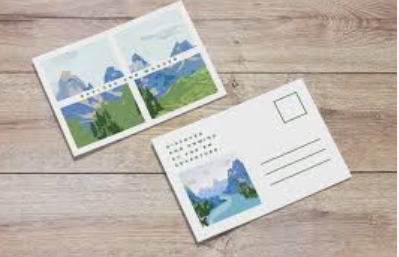
Today we will write postcards to each other. We will have 2 dedicated postpeople to deliver the postcards also. The postcards can be compliments, kind thoughts, a thank you, a joke, or even a story. The must be kind and with school-appropriate messages. Everyone will write 3 postcards , maybe one to a friend, one to someone they don’t talk to much, and one to a classmate who’s been helpful.
Include messages like Thank you for…”
“I like when you…”
“Here’s a funny joke for you…”
“You’re great at…
Homework this week
As we approach our last stretch in CLASS we will be taking part in a fun project called ‘Teach the Teacher’.
Each day from the class will teach the class about something of their choice. They can choose anything they like (teach us a skill, teach us about something factual, showcase a hobby, an art lesson, sports lesson, reading lesson, etc.). There really is nothing out of bounds once it is school appropriate.
They can present their information to the class any way they like (discussion, PowerPoint, information sheet they have created, bring in pictures, create a poster, have something on a USB to be displayed on our interactive whiteboard, real object to show etc).
They will present to the class for around 4 minutes and should also prepare a short follow up activity for the class based on this (worksheet, quiz, questions, a chance to give it a try, picture to colour, etc.) This is a fantastic opportunity for the children to share their interests with the
class and also build on their public speaking skills, confidence and love for education. Pupils are permitted to bring in any materials/props/etc that they may need to assist them. Any photocopying of pages can be done in school and if printing is required you can send it via email (cforde@stmarysns.ie).
This week and next week, in place of the usual homework, pupils should prepare their ‘Teach the Teacher’.
- Think about what they would like to teach
- Plan their lesson
- Prepare their materials and follow up activity
- Practice their presentation.
Pupils should also be encouraged to practice their presentation in the nights leading up to their presentation day.
I can’t wait to learn lots of new things over the coming weeks. If you have any questions please just get in touch! 😊
Letter To My Future Self
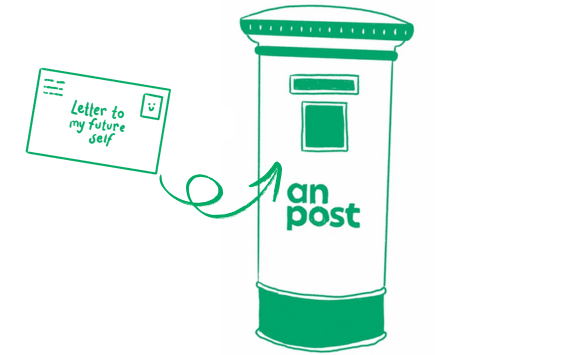
Capture the moment. Send it to your future self.
Ever wished you could check in with yourself a year from now? A freepost Letter to My Future Self gives you the chance to do just that. Write a letter today and post it for free. An Post will send it back to you in a year – no stamp needed.
How does it work?
Write your letter
Put pen to paper and write a letter to your future self. Share your thoughts, goals, memories or anything you want future you to remember.
Add your address
Write your full name and return address in the top left corner of the envelope. This is how we’ll send it back to you next year.
Send with love for free
You don’t need a stamp. Just write FREEPOST in the top right-hand corner and send your letter to: Letter to My Future Self, PO Box 13812, Freepost FDN7725, Dublin 1.
Returned to you in May 2026
We’ll keep it safe and deliver it back to you next May.
Why take part?
Because a year can change everything. Writing a letter to yourself is a small but meaningful way to pause and reflect. It’s a gift from today’s you to future you.
Need inspiration?
- What are you hoping for in the year ahead?
- What’s something you never want to forget?
- What feels important today that might not in a year?
- What are you dreaming about, big or small?
Ready to write?
Grab a pen and take a quiet moment. Your future self will thank you.
Simply put your letter into an envelope, don’t forget to add your return address so An Post can send your letter back to you in a year.
The Challenge
“Here are 14 lollipop sticks.
Your challenge is to build a bridge that can stand on its own—no glue, no tape, no string, no supports—just the sticks.
The bridge must span at least the width of a copybook, and if possible, it should be strong enough to hold a small book or a pencil case on top.
You can bend, stack, twist, or interlock the sticks however you like—but nothing can hold them together except the sticks themselves.
You have 15 minutes. Let’s see what you can create.”
Thursday 29th of May
🎭 Dance Routines:
You’re working on these today and performing them tomorrow!
🏛️ Hall Time:
We’ve got some available slots in the hall this morning — we’ll be using those for dance.
✉️ Penpal Letters:
Make sure your letters are completed today.
Don’t forget to bring in your sketchnote about your name for tomorrow morning – it will go into the letter before we post it tomorrow evening.
🎨 Posters:
Make sure your posters are finished as well.
💻 Chromebooks:
We have them available this morning.
⚽ Soccer Teams:
We’re creating six-a-side teams for both boys and girls in 5th and 6th Class. The tournament is on the Tuesday of Active Week. .
Wednesday 28th of May
This morning at 9:30 AM, we will be taking part in the paper airplane competition. Please note that we were meant to have our five winners selected by then, so we’ll need to finalise that before heading out.
In the afternoon, we’ll begin practicing our dance routine, and we’ll also be making our Irish game today.
Tuesday 27th of May
Well done to everyone on the brilliant work with the hydraulic machines yesterday! One group’s machine had two hinges—one moved over 90 degrees and the other reached 87 degrees. That’s a total movement of nearly 180 degrees, which is incredible engineering. You worked really well together and should be proud of your efforts. Great job!
Why Are Hydraulic Machines Still Important Today?
Hydraulic machines use fluid pressure to create movement. They’re still used all over the world in machines like diggers, forklifts, car brakes, fire engines, airplane controls, and even theme park rides. They’re powerful, reliable, and great for lifting or pushing heavy things with smooth, controlled force. Understanding how they work helps us see how much we rely on them in everyday life—even if we don’t always notice!
Rugb after 1st break today. Your homework this week is to research your name and create a sketchnote on it.
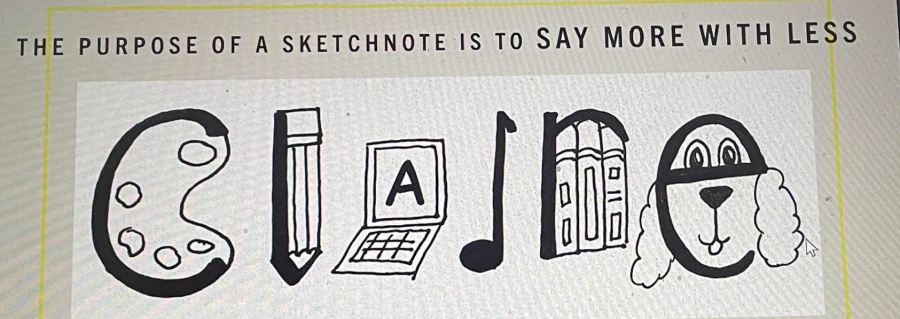
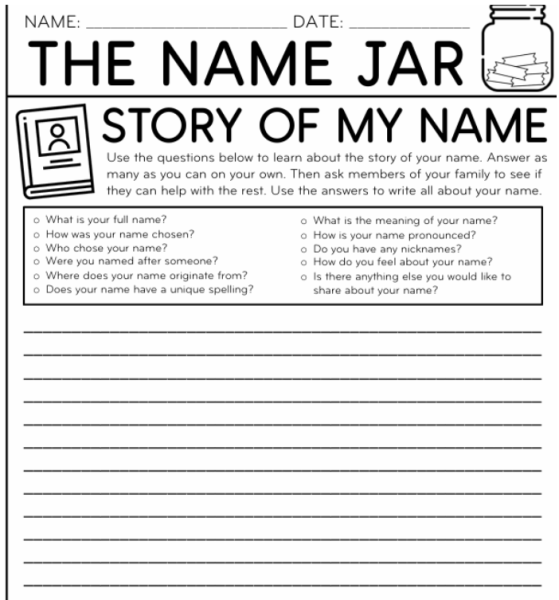
The teacher from Ennis has been in touch, and we’ll be writing one final letter to our pen pals to wrap up the year. It’s a great chance to say goodbye, share some memories, and wish them a happy summer. We’re starting these letters today, and here are a few ideas you might include:
What to Write About:
- A favourite moment from this school year – maybe from a trip, a project, or something funny that happened in class.
- Something you learned this year that you found really interesting or surprising.
- Your summer plans – whether it’s holidays, camps, sports, or relaxing at home.
- What you’re looking forward to next year, either in school or outside of it.
- A message of thanks to your pen pal – what you enjoyed about writing to them or what you learned from their letters.
Let’s finish the year with a kind, thoughtful note to our friends in Ennis!
Today in Irish, we’re going to be creating our own board games! This is a fun and creative way to revise the verbs we’ve been working on. One side of the board will be in English, and the other side will be in Irish. You’ll use your knowledge of verbs to build challenges, answer questions, and make your way around the board.
Let’s make it colourful, clever, and full of good Irish language practice!
We will return to Stay Safe today also.
Mr. Brown Memory Project
Today we’re starting a very special activity. Each student in the school will create a page to honour a memory of Mr. Brown. It can be a short poem, a drawing, a written memory, or just a few kind words—anything that reminds you of a happy or meaningful moment you shared with him or something you appreciated about him.
Each person will use an A4 page in portrait layout. When everyone has finished, we’ll gather them all together into a book—a collection of memories from the whole school, celebrating Mr. Brown and everything he brought to our lives.
Let’s make it thoughtful, personal, and full of heart. We’re starting today.
Monday 26th of May
We have made a good start to our hydraulic cranes, we will complete them today and record a video of them working.
You must pick out music for your dance routine today and you will get an opportunity to practice also.
I was talking to a coach recently, and he told me about someone who came in to help his team play their best. This person talked about something called an identity statement.
Someone asked, “What’s that?” And he explained it like this:
It’s the kind of player—or the kind of person—you want to be, no matter what’s happening.
Some people say things like, “I’m a winner,” or “I always score goals.” But the truth is, sometimes you don’t win. Sometimes the other team is better. Sometimes things just don’t go your way.
So if your identity is just about winning, you’ll feel lost when you lose.
Instead, this guy gave an example of a better identity statement. He said:
“Even if I’m losing, I never give up. I keep going. I try to figure things out. I fight to the end.”
And the great thing about that is—it’s always in your control. You can be tired, you can be behind, but you can still keep trying. That’s something you can choose to do every day.
So the question is:
What kind of player—or person—do you want to be, even on a tough day?
Because that identity isn’t based on what happens—it’s based on how you respond.
Which of these are good identity statements in our opinion?
I give my best effort, even when it’s hard.
I’m going to be the smartest person in the class.
When things don’t go my way, I find a way to keep going.
I always win when it matters.
Writing my identity Statement (4 steps)
Step 1: Think About Tough Days
“What kind of person do you want to be even on a bad day—when you’re tired, frustrated, or things aren’t going your way?”
Think about times you:
- Got stuck on a hard question
- Lost a game
- Had an argument
- Didn’t do well on a test
Step 2: Focus on What You Can Control
“Your identity statement isn’t about being perfect. It’s about what you can always try to do, no matter what’s happening.”
For example things you can control:
- Effort
- Kindness
- Problem-solving
- Bouncing back from mistakes
- Listening
- Staying calm
: “What’s something you want to be known for—something you can control?”
Step 3: Use Simple, Strong Language
We will write one or two clear sentences, using “I” statements.
“I’m the kind of person who ________, even when ________.”
Or:
“No matter what happens, I always try to _______.”
Examples:
- “I always try to stay calm and solve the problem, even when I feel upset.”
- “I give my best effort, even when I don’t feel like it.”
- “I include others, even when they’re not my best friend.”
- “I don’t give up, even when the work is hard.”
Step 4: Make It Visible and Revisit It
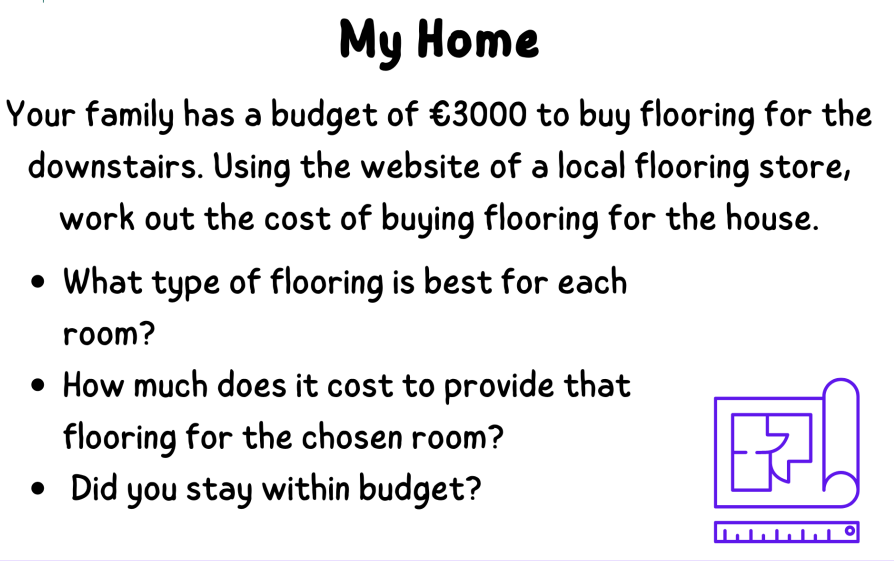
- Write it on a card
We will stick our cards on a poster with the title
“This is who we are, even on the hard days.”
On your Chromebooks this evening you will complete this task.
Thursday 23rd of May
We will begin building our hydraulic machines today.
What Are Hydraulic Machines?
Hydraulic machines use liquids (like water or oil) to move things or lift heavy objects. They work by pushing liquid through tubes using things like syringes. Because liquids can’t be squashed, the pressure spreads and makes parts of the machine move.
How Do They Work?
When you push one syringe, it pushes the liquid through a tube into another syringe. That second syringe moves too—like magic! But it’s really science—liquid pressure doing the work.
Why Are They Important?
Hydraulics help us lift heavy things, move parts of machines, and control big vehicles. They’re powerful, reliable, and found all over the place.
Where Do We See Them?
- Digger arms and cranes on building sites
- Airplane brakes and car lifts in garages
- Fairground rides
- Wheelchair lifts, fire engines, and forklifts
Paper airplanes competition today and you will select music for your dance routine.
Wednesday 21st of May
Fantastic finish to the Throwball Smash yesterday. The games were good and more importantly it was great to see how you responded when the game wasn’t going so well for you.
Busy day ahead. The hurling finals are on this evening and I need referees, umpires and someone to write the score on the board for all the spectators.
Maths and Vocabulary test today also. This isn’t about your score. I’m not interested in how many you get right or wrong. What matters to me is effort — showing up, focusing, and giving your best. That’s what counts.
You’ve worked hard all year, and now it’s time to challenge yourself and see where you are. This is part of learning too — taking what you’ve built up and giving it an honest go.
So take a breath, back yourself, and give it everything you’ve got. I’m proud of how far you’ve come already — now let’s keep going.
Tuesday 20th of May
I hope to play quarter finals and semi finals of the Volleyball championship today, we will then play the final tomorrow evening.
There will be a few tests between now and Thursday. There will be a Maths test in school tomorrow and we will take a short Irish test today. We will also take a vocabulary test on all the words we have looked at this year and you will complete a Sketchnote on a piece of text about Northern Ireland.
WE will have a new project day soon. We will build hydraulic machines.
Wednesday 14th of May
Our website is back after a brief hiatus. Hopefully it stays up and running until the end of the year.
The plan is to complete the volleyball championship today. Going straight through to the semi finals are Mr Forde’s Force and Ms. Barry’s Blazers. In the quarter finals Mr Forde’s Flyers will play Ms Sheward’s Stormers and Ms Barry’s Bombers will play Ms Sheward’s Smashers.
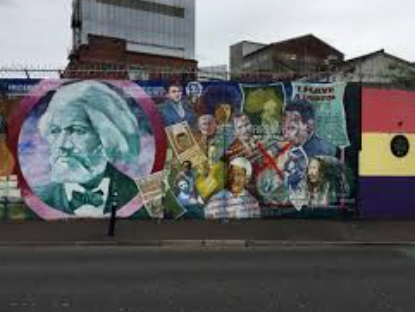
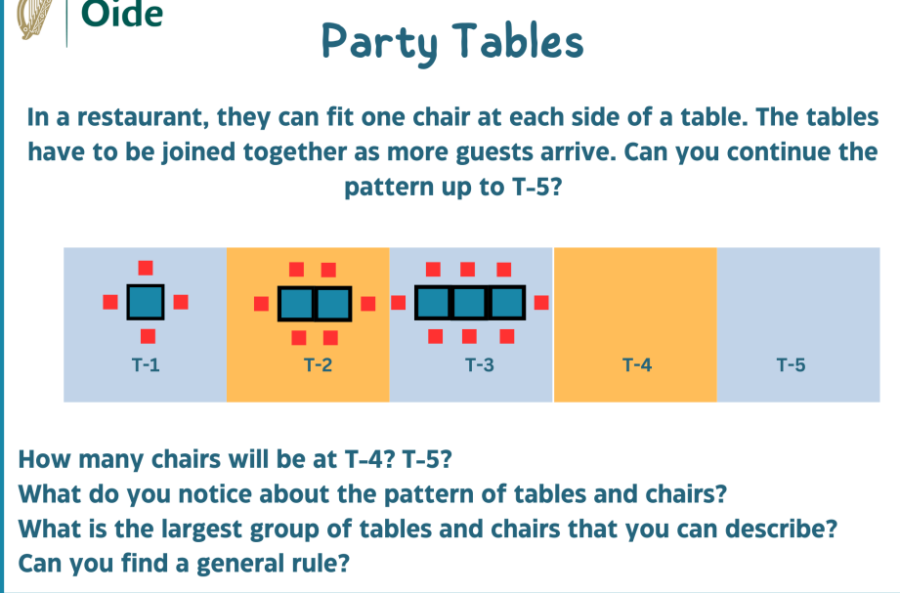
We have a reading tests today and we will begin learning about Northern Ireland also. We have not created a Sketchnote recently so we will complete a Sketchnote on Northern Ireland. Our art will also cover Northern Ireland. We will look at the Peace Walls in Belfast and how people use murals to express identity, history and hope.
Thursday 8th of May
Teacher swap today for Creative Schools Week. You will be going to Ms Keogh.
The 3rd/4th class hurling warm up games have completed and they are starting the knockout games today. We are on schedule to play the final next Wednesday. Once again thanks to referees and all the helpers who bring helmets and line the pitch every day. Also at 2pm today we will be showing the rules of Throw Volleyball to Ms Barry’s class.
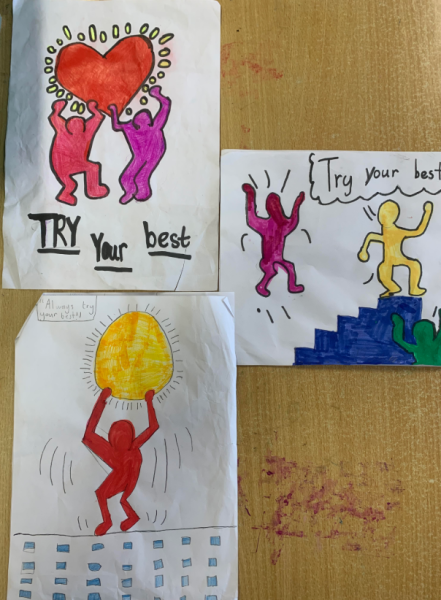
Here are our winning murals. We may select just one or a combination of the three depending on colour and space available. Well done to everyone.
Here is a link to an event in Blessington on Saturday 10th for Bike week. Please let your parents know.
How did your reading and Maths questions go last night?
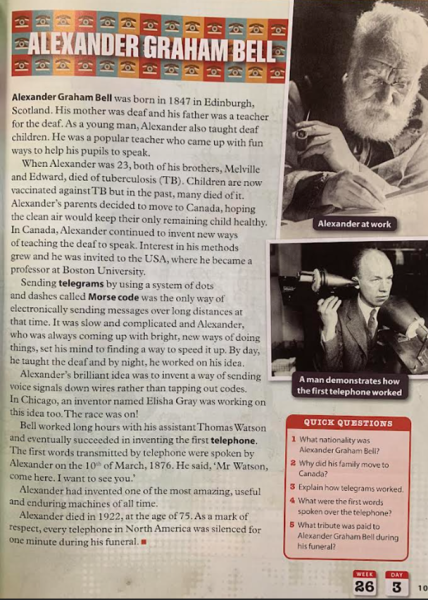
Computational Thinking Thursday
Tuesday 6th of May
Rugby at 9:30 this morning.
I hope you had a nice long weekend. To start our Tuesday morning, what is equal about these 4 parts?

It is Creative Schools Week, We will complete and present our mural designs this week. You will swapping classes and getting a short lesson from another teacher in the school. We also have another project day coming very soon where we will build cranes.
We will go over any questions from last weeks Maths test this morning and we will begin looking over this weeks Maths test this morning.
Idioms v Proverbs
Idioms
- Idioms are expressions with meanings that aren’t obvious from the individual words.
- They often can’t be understood literally.
Example:
- “Kick the bucket” = to die (not literally kicking a bucket)
- “Spill the beans” = to reveal a secret
Proverbs
- Proverbs are short, well-known sayings that express a general truth or piece of advice.
- They usually can be taken more literally or understood from context.
Example:
- “A stitch in time saves nine.” = Fixing a problem early prevents it from getting worse.
- “Actions speak louder than words.” = What you do is more important than what you say.
Summary:
- Idiom = figurative phrase with a meaning that’s not clear from the words.
- Proverb = wise saying or advice based on common sense or experience.
Idioms v Proverbs Sorting Game
- Break the ice
- Honesty is the best policy
- Under the weather
- The early bird catches the worm
- When in Rome, do as the Romans do
- Hit the nail on the head
- Let the cat out of the bag
- Don’t count your chickens before they hatch
- Piece of cake
- Practice makes perfect
Dé hAoine 2ú Bealtaine
Great work this week, everyone! This morning, we’ll finish our spellings, Irish test, and maths test, and we’ll also get our homework corrected. Well done on the volleyball yesterday – we’ll head outside today to refine the rules a bit more. There might even be a Fifth Class Championship on the way – we’ll see! Let’s stay focused and make the most of the morning.
Déardaoin 1ú Bealtaine
How did your reading go last night? Any Maths questions? We have Chromebooks this morning and you will be begin designing your mural with your group. We will read the design brief from yesterdays notices again before we start.
Computational Thinking Thursday
Dé Ceadaoin 30ú Aibréan
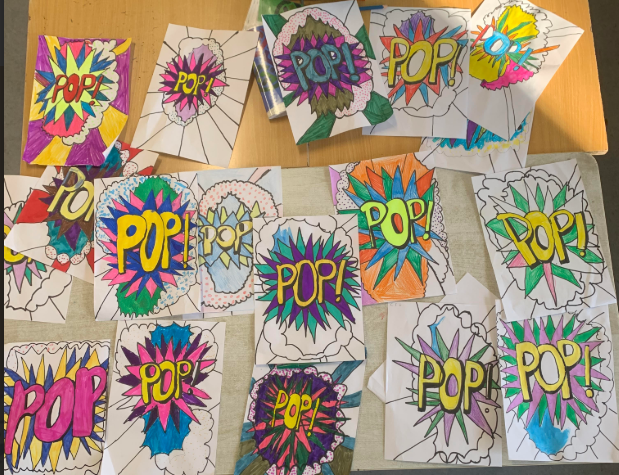
Some of our Roy Lichtenstein pop art from yesterday. Roy Lichtenstein’s pop art looks like big, colorful comic book pictures. He used dots, thick black lines, and bright colors to make his art stand out. He painted everyday things like people talking or crying, and made them fun and bold. His art helped show that cartoons can be real art too.
Here is more examples of his art.
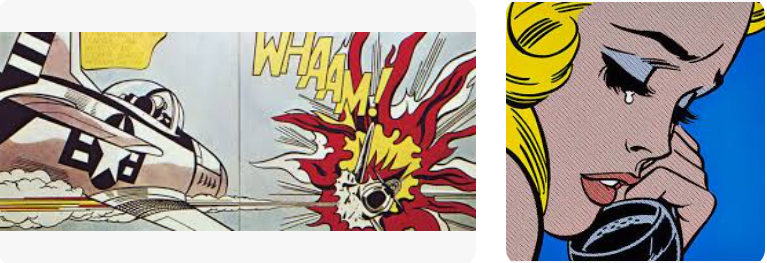
both Keith Haring and Roy Lichtenstein are pop artists, but their styles are a bit different.
- Roy Lichtenstein used comic book-style pictures with dots and speech bubbles.
- Keith Haring made bold, simple drawings with bright colors and thick black lines, often showing people dancing or moving.
They both wanted to make art that was fun, easy to understand, and connected to everyday life.
We will now begin designing our murals using their styles as inspiration. Paint is being ordered and here is your brief.
Mural Design Brief – “It’s not about being perfect, it’s about trying your best”
Your group’s task is to design a mural that will be painted on the school’s exterior wall.
Theme: Well-being – with a focus on the message:
“It’s not about being perfect, it’s about trying your best.”
Your mural design should:
- Be inspired by the pop art styles of Keith Haring and Roy Lichtenstein.
- Include pictures, symbols, quotes, or words that reflect the theme.
- Be bold, positive, and easy to understand at a glance.
Steps:
- In groups of three, create your mural design on the sheet provided.
- Prepare a short presentation (2–3 minutes) that explains:
- Why your mural should be chosen.
- What inspired your design.
- How it reflects the theme of trying your best.
- What message you want people to take from it.
Remember: The winning design will be chosen to go on the wall—and everyone in the class will help paint it!
Be creative, work as a team, and most of all—try your best!
How did your homework go last night? What symbols did you include on your reading? Any Maths questions?
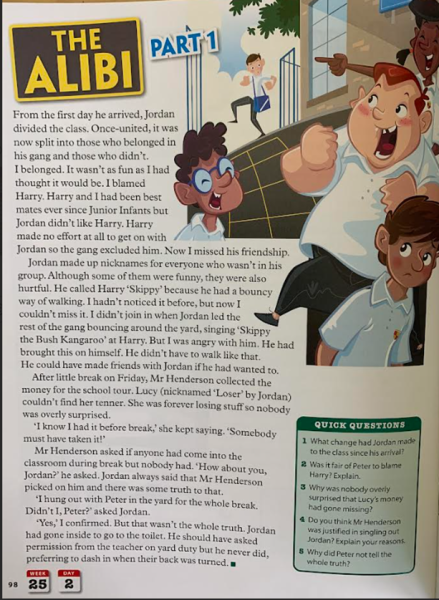
In PE today we have some fun games to play, you will be designing athletics games where you can only use hoola hoops, bean bags and cones. We will also be setting up the field for the 3rd 4th class hurling during lunch..
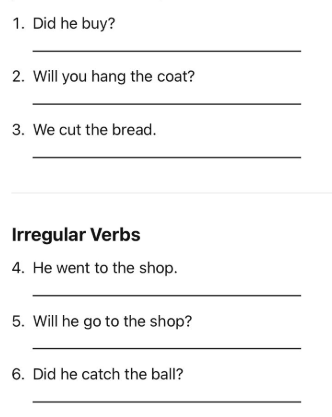
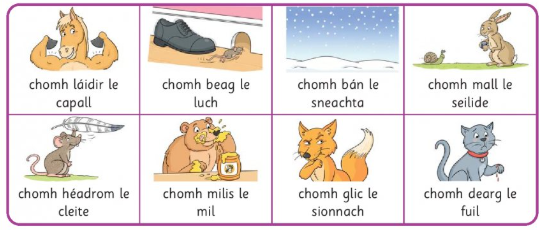
Irish Verb Challenge
Dé Máirt 29ú Aibréan
How did your homework go last night? Any Maths questions for me? What symbols did you include on your reading?
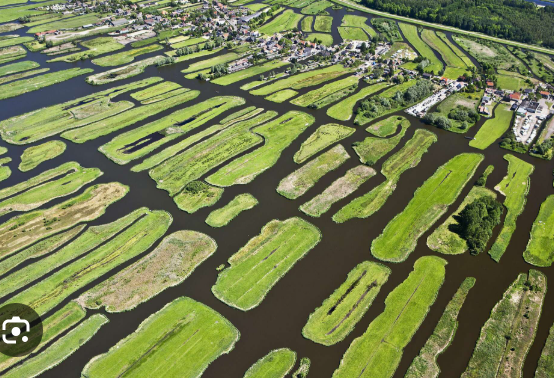
What do you remember about the Polders of the Netherlands yesterday?
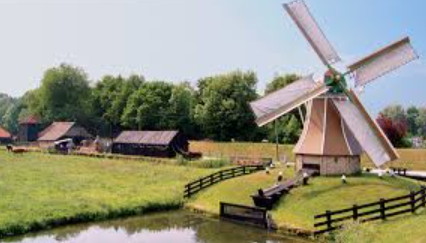
The Netherlands is a small country in Europe, but it’s famous for doing something amazing—creating land where there used to be sea! These areas of land are called polders. Long ago, large parts of the country were underwater. The Dutch people wanted more space to live and farm, so they came up with a clever idea: build walls, called dikes, to keep the sea out, and then pump the water out from behind the dikes.
To do this, they used windmills. These windmills weren’t just for show—they had an important job. They helped pump water from the land into canals, and sometimes back into the sea. You can still see many windmills and canals in the Netherlands today. The canals help control water levels and stop flooding.
One famous example is the creation of new land in the area of the IJsselmeer (pronounced “Eye-sell-mare”), a big lake that used to be part of the sea. The Dutch built a huge dam, called the Afsluitdijk, to close it off. Then, over time, they pumped water out and turned the muddy bottom into farmland. Towns and farms were built there, and people now live where fish once swam!
Polders are a great example of how people can work with nature using science and teamwork. They show how the Dutch turned a challenge into a solution!
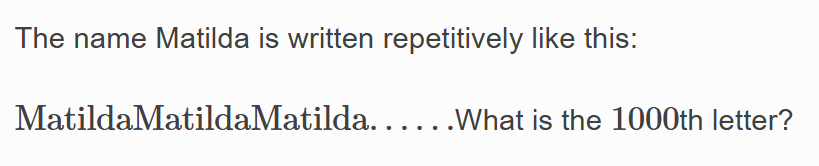
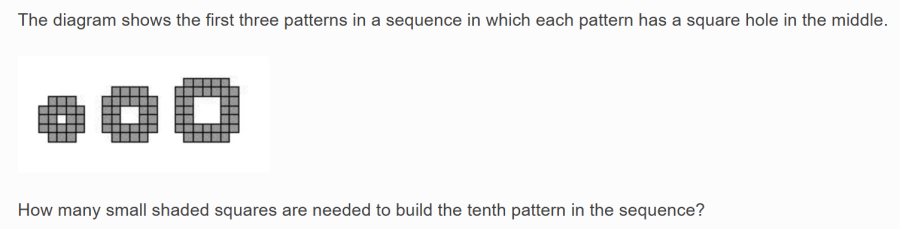
We begin Algebra in Maths today. Algebra is like solving puzzles with numbers and letters. Instead of always using numbers, we use letters like x or y to stand for numbers we don’t know yet. We use rules to figure out what the missing number is. It helps us solve problems in a smart way.
Stillness and Sound
“Close your eyes. Imagine a still lake at sunrise. The world is quiet. A single swan glides across the water, smooth and silent. Every movement is slow, calm, and full of grace. There are no ripples, no rush. Just the steady rhythm of water, wings, and peace. Listen now, and see if you can feel what it’s like to move that gently through the world.”
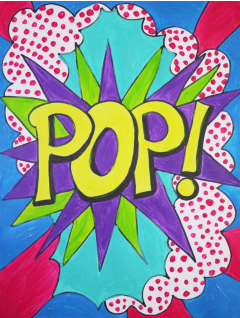
Today in class, we will be creating our own Pop Art masterpieces, inspired by the bold and colourful style of Roy Lichtenstein. But who is Roy, and what is the Pop Art movement? Roy Lichtenstein was a famous American artist known for his comic-book-style paintings, using bright colours, dots, and dramatic scenes. The Pop Art movement began in the 1950s and celebrated everyday things like cartoons, advertisements, and celebrities. It turned ordinary images into exciting works of art. Get ready to be creative, have fun, and make art that really pops!
Dé Luain 28ú Aibréan
Great work before Easter wen we completed a major project painting the school gates, spending three to four days working together to bring it to life. Almost every student took part, which was fantastic to see. Throughout the project, students developed a wide range of skills, including teamwork, creativity, planning, problem-solving, and attention to detail.
Looking ahead, we are hoping to take on another exciting project before the summer holidays — designing and painting one or more murals around the school. This project will be tied to a theme, and students will need to research, plan, and design their murals carefully. We’ve already had some discussions with Tony about finding suitable canvases and locations to work on, and more planning will take place in the coming weeks.
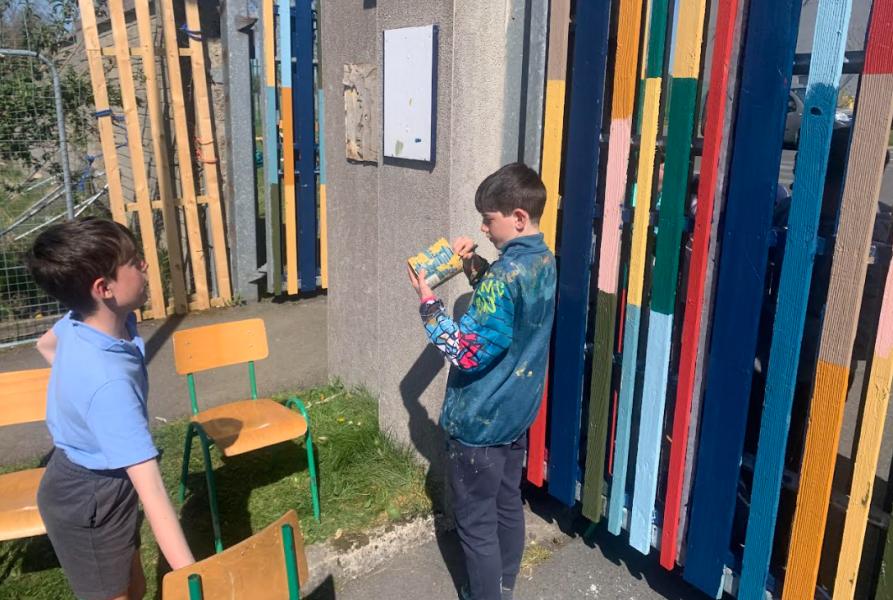
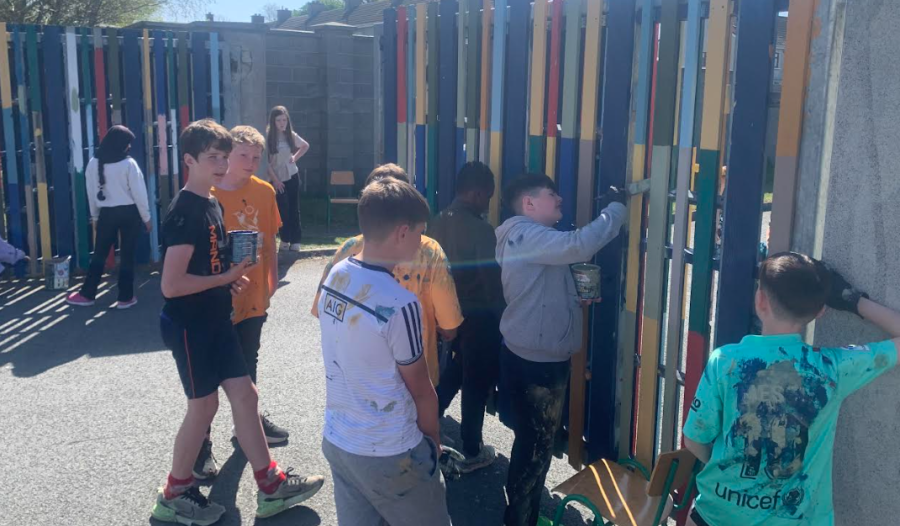
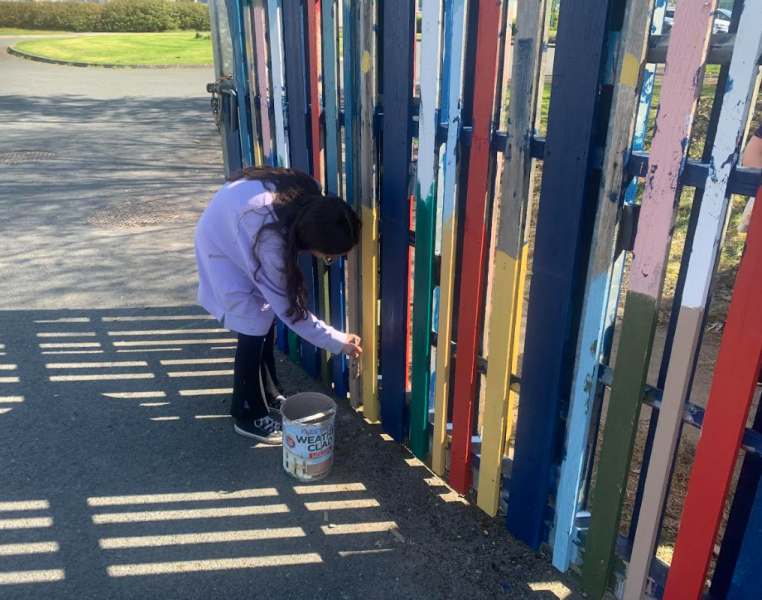
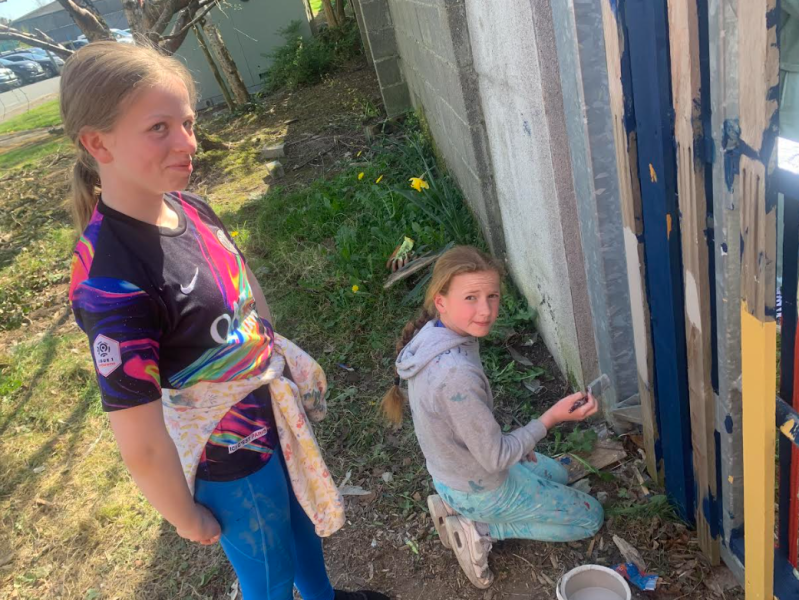
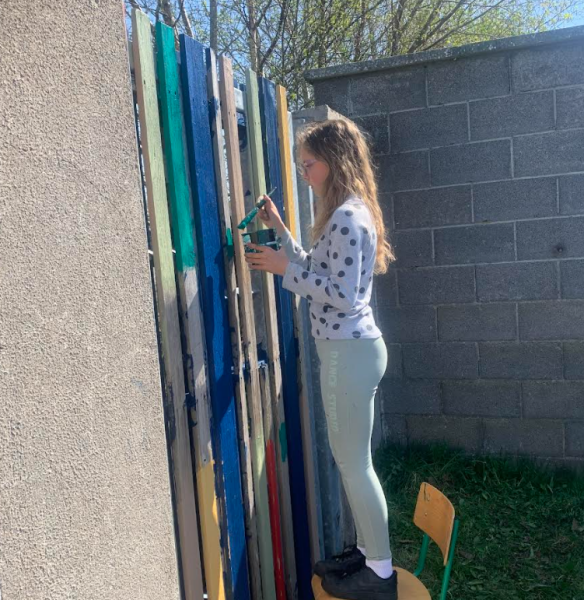
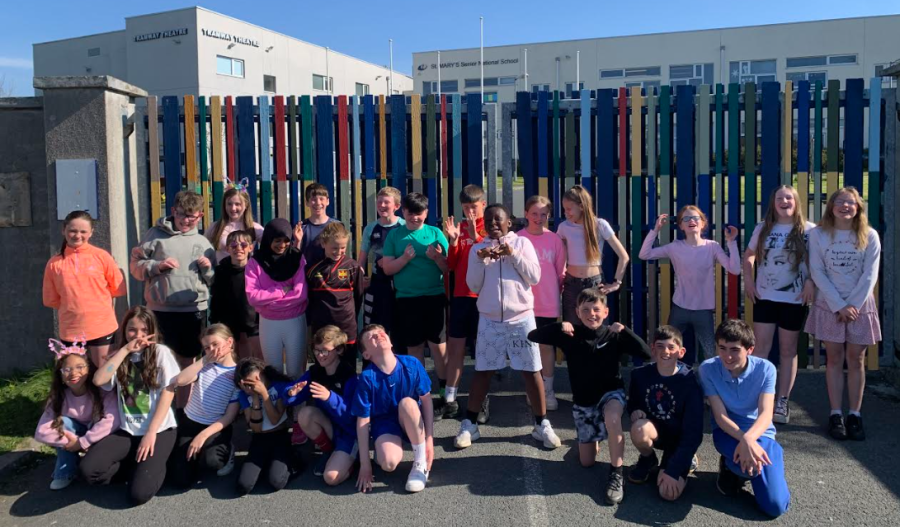
Let’s research murals on the Chromebooks this evening.
The 5th class teachers have not agreed on a them yet but I will be looking at the them of ‘Doing your best’
Our mural will reflect the idea that we don’t have to be perfect, but we always need to give our best in everything we do.
“What does ‘doing your best’ mean to you?”“
How can we show that in a mural? Is it about being perfect?”
You will research examples of artwork, people, or stories that focus on the theme of giving their best, not necessarily achieving perfection.
- Find
- Famous Quotes: “Success is the sum of small efforts, repeated day in and day out.” — Robert Collier
- Stories of Perseverance: Examples like athletes (e.g., Michael Jordan’s work ethic), artists who worked through many failures (e.g., Van Gogh, who didn’t achieve fame until later in life), or historical figures who failed but kept going (e.g., Thomas Edison’s invention process).
- Artwork Celebrating Effort: Murals or paintings that show people trying, failing, and trying again, such as depictions of struggle or growth.
Taking Notes:
- What they researched: Name, quote, story, or artwork they found.
- Why this represents the theme of “doing your best.”
- One idea they want to include in the mural.